

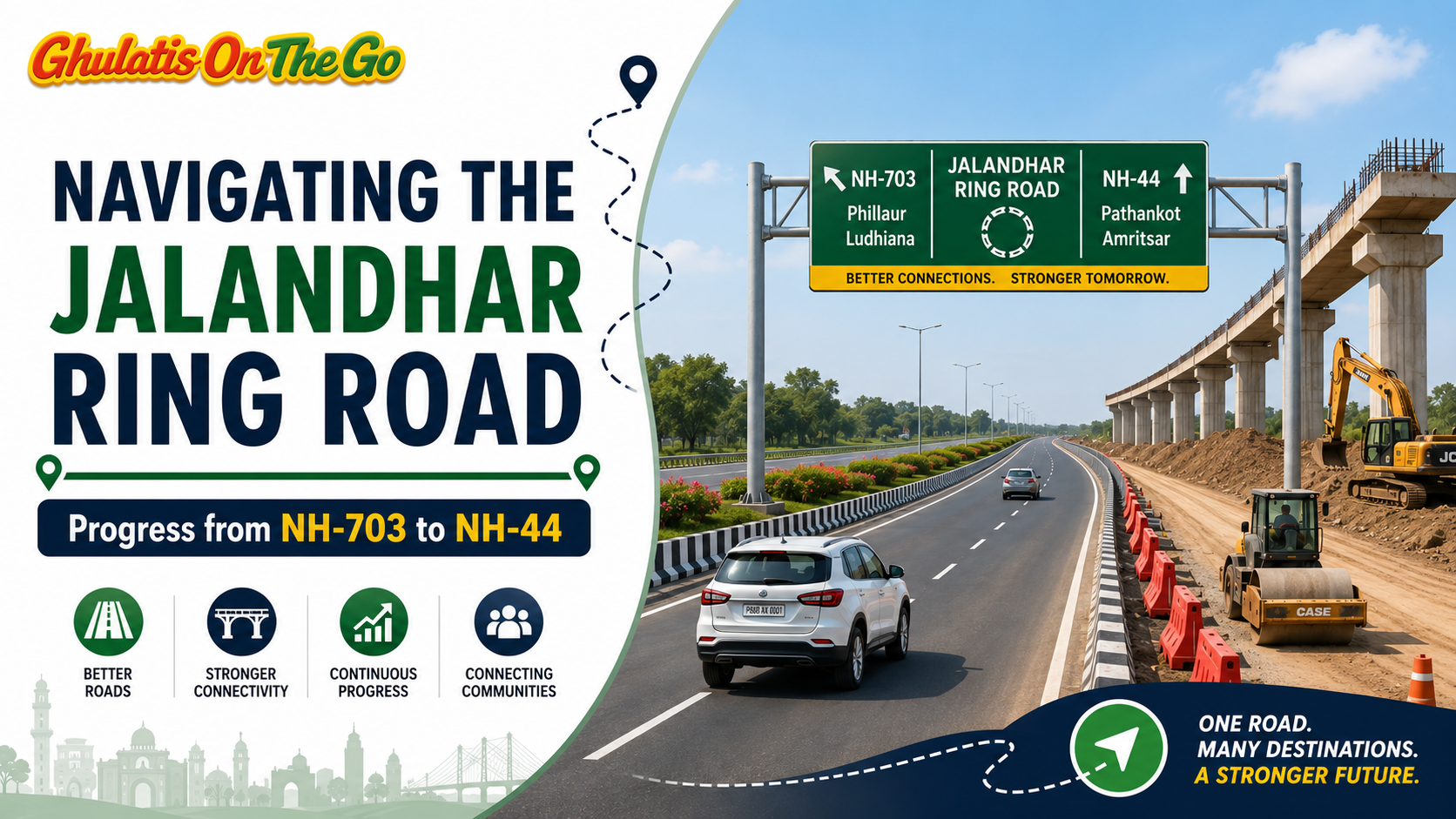
The Ghulatis On The Go team embarked on a journey to provide a comprehensive update on the ongoing construction of the Jalandhar Ring Road. This significant infrastructure project, overseen by the National Highway Authority of India, aims to alleviate city congestion and improve connectivity for travelers heading towards Amritsar, Jammu, and Delhi. The team's drive covered the stretch from Nakodar Road (NH-703) to the Delhi-Amritsar GT Road (NH-44), offering a firsthand look at the progress and challenges of this ambitious undertaking.
The journey began on the 66-foot road in Jalandhar, leading towards Nakodar Road. This initial segment of the drive provided a glimpse of the existing road infrastructure before transitioning into the construction zone. The Jalandhar Ring Road is designed to connect major national highways, specifically NH-703 (Nakodar Road) with NH-44 (Delhi-Jalandhar Highway), creating a vital bypass around the city. The team's objective was to cover the entire accessible stretch of this developing ring road, documenting the various stages of construction and the overall impact on the local landscape.
The project is a crucial component of road development in Punjab, intended to enhance regional connectivity and streamline traffic flow. As the team navigated through the construction areas, they observed different phases of work, from earthwork and leveling to the initial stages of bridge construction. This detailed coverage offers valuable insights into the scale and complexity of modern highway development in India.
Starting Point: Nakodar Road (NH-703)
The drive commenced from Nakodar Road, also identified as NH-703. This road serves as a key artery, and its connection to the new ring road is expected to significantly improve access and reduce travel times. The initial segment of the journey on Nakodar Road was relatively smooth, with existing infrastructure in place. However, as the team approached the designated entry point for the Jalandhar Ring Road, the landscape transitioned into an active construction site.
The entry point to the ring road from Nakodar Road, near Village Kang Sabu, marked the beginning of the dedicated construction stretch. Here, the team observed the initial stages of the bypass, characterized by extensive earthwork and the presence of partially constructed bridge pillars. The transition from a paved road to a rough, unpaved construction path highlighted the ongoing nature of the project. The team noted the presence of heavy machinery and construction materials, indicating active progress in this section.
Navigating the Construction Zone
Upon entering the Jalandhar Ring Road construction area from Nakodar Road, the driving conditions changed significantly. The road surface was primarily unpaved, consisting of gravel and compacted earth. This section required careful navigation due to the rough terrain and the presence of construction debris. Despite the challenging conditions, the team continued their drive, aiming to cover as much of the developing bypass as possible.
The earthwork in this segment appeared largely complete, with significant leveling already undertaken. However, the absence of blacktop surfacing meant a bumpy ride. The team observed rollers and other heavy machinery actively engaged in compacting the soil and preparing the base for future layers. Water sprinklers were also in use, indicating efforts to manage dust and consolidate the earthwork. The presence of retaining walls in various stages of completion further underscored the ongoing development.
Progress Towards NH-44
As the team progressed along the Jalandhar Ring Road, they encountered different sections of the construction. Some areas showed more advanced stages of development, with clearer road layouts and more defined structures. The journey involved navigating through stretches where the road was still in its foundational stages, requiring detours onto existing local roads to bypass impassable sections. This adaptive approach allowed the team to cover a broader overview of the project's progress.
The construction included several underpasses and flyovers, which are critical components for seamless traffic flow once the ring road is operational. The team observed the concrete pillars and structures of these elevated sections, some with rebar exposed, awaiting further construction. The scale of these structures indicated the ambitious nature of the project, designed to accommodate significant traffic volumes and provide grade-separated intersections with existing routes.
Key Infrastructure and Milestones
A notable aspect of the Jalandhar Ring Road project is its integration with existing national highways. The team's drive aimed to connect NH-703 with NH-44, demonstrating the bypass's role in linking these major routes. Along the way, they observed various construction sites dedicated to producing materials and components for the road, such as pre-cast concrete elements for retaining walls and bridge sections. These sites highlighted the logistical complexity and the extensive resources deployed for the project.
The team eventually reached a section where blacktop surfacing had been completed, offering a smoother driving experience. This completed segment provided a glimpse of the final appearance and quality of the road. The presence of both completed and ongoing sections illustrated the phased approach to construction, with different segments progressing at varying rates. The overall impression was one of continuous activity, with workers and machinery actively engaged in advancing the project.
Connecting to Delhi-Amritsar GT Road (NH-44)
The culmination of the team's journey was the connection point with NH-44, the Delhi-Amritsar GT Road. This section featured a complex interchange with multiple flyovers and ramps designed to facilitate smooth transitions between the ring road and the national highway. The team observed the intricate network of elevated structures, indicating a sophisticated design to manage high traffic volumes.
At the intersection with NH-44, the team noted the presence of a construction site with machinery and materials for the flyovers. They observed both ascending and descending ramps, indicating a multi-directional flow of traffic. The engineers on site informed the team that the entire Jalandhar Ring Road project is targeted for completion by mid-2027, with significant progress already made. The scale of the flyovers and the ongoing work underscored the project's importance in enhancing regional connectivity and reducing travel times for commuters and freight traffic.
Practical Takeaways
The Ghulatis On The Go team's drive along the Jalandhar Ring Road provided several practical insights for future travelers and those interested in infrastructure development:
- Current Road Conditions: As of the drive, large sections of the Jalandhar Ring Road are still under construction, featuring unpaved surfaces, gravel, and earthwork. Travelers should expect rough driving conditions and potential detours in these areas.
- Progress and Speed: The construction is progressing at a noticeable pace, with significant earthwork, leveling, and bridge construction underway. The presence of heavy machinery and active work sites indicates a commitment to timely completion.
- Connectivity: The ring road is designed to connect major national highways, including NH-703 (Nakodar Road) and NH-44 (Delhi-Amritsar GT Road). Once completed, it is expected to significantly reduce travel time and city congestion in Jalandhar.
- Key Infrastructure: The project includes multiple underpasses and flyovers, which are crucial for seamless traffic flow and grade separation. These structures are in various stages of construction, with some already nearing completion.
- Anticipated Completion: According to site engineers, the entire Jalandhar Ring Road is targeted to be operational by mid-2027. This timeline suggests that travelers can anticipate a fully functional bypass within the next few years.
- Local Impact: The ring road is expected to transform travel around Jalandhar, offering faster routes towards Amritsar, Jammu, and Delhi, and alleviating traffic within the city.
Overall, the Jalandhar Ring Road project represents a significant investment in regional infrastructure, promising improved connectivity and reduced travel times upon its completion. The ongoing construction, though presenting temporary challenges, is a testament to the ambitious development goals for the region.
Watch the Original Journey
This article is connected to the original Ghulatis On The Go video below. Watch it for the complete visual experience and conversations from the road.