

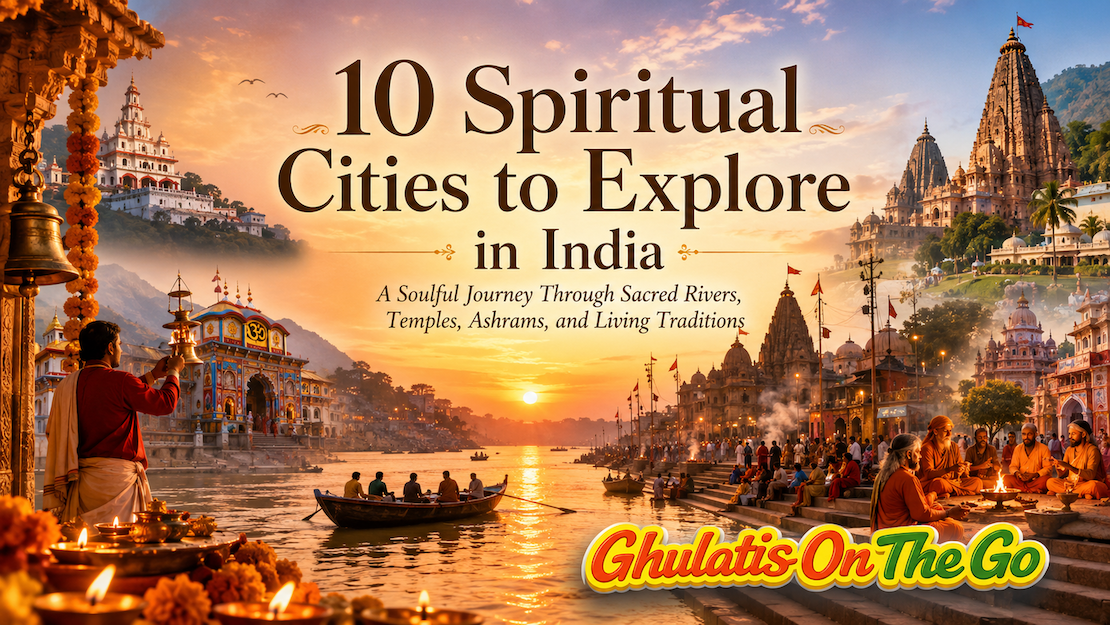
India is not a country you simply visit. It is a country you feel. Nowhere is that more true than in its spiritual cities, where the rhythm of daily life is shaped by temple bells, river prayers, sacred meals, ancient stories, and traditions that continue to breathe through crowded lanes, quiet courtyards, and sunrise rituals. A spiritual journey through India does not have to belong to one religion or one kind of traveler. It can be a journey of faith, curiosity, history, architecture, family connection, reflection, or simply a desire to understand how deeply place and devotion are woven together in Indian life.
For travelers who want to explore India with meaning, these ten spiritual destinations offer some of the most powerful experiences in the country. They are not just stops on a map. They are cities where devotion is visible in everyday life, where the past does not feel distant, and where travelers can slow down enough to notice the details that make India unforgettable.
Varanasi is often the first city people think of when they imagine spiritual India, and for good reason. Set along the sacred Ganga in Uttar Pradesh, Varanasi is also known as Kashi and Banaras. Incredible India describes it as an ancient center of spirituality and devotion with roots tracing back more than 3,500 years. The city’s identity is inseparable from the river. At dawn, boats move across the water as the ghats begin to wake. Pilgrims bathe, priests prepare for rituals, families gather, and the first light turns the river into something that feels almost timeless. The ghats are not a backdrop here. They are the heart of the city. Dashashwamedh Ghat, located close to Kashi Vishwanath Temple, is one of the most prominent riverfront spaces in Varanasi and is closely associated with the city’s evening Ganga Aarti. For visitors, Varanasi can feel intense, beautiful, overwhelming, and deeply moving all at once. It is a place where life, death, prayer, music, food, philosophy, and daily routine sit side by side without apology. A visit here is best approached slowly. Walk the lanes near the ghats, spend time by the river at sunrise, visit temples respectfully, and leave space in the itinerary for moments that cannot be planned. Varanasi does not reveal itself through a checklist. It reveals itself through attention.
Rishikesh offers a different kind of spiritual energy. Located in Uttarakhand, in the Himalayan foothills beside the Ganga, it is widely known for yoga, meditation, ashrams, and wellness. Uttarakhand Tourism describes Rishikesh as commonly referred to as the “yoga capital of the world,” with visitors coming to learn yoga and experience spiritual study. What makes Rishikesh special is the way nature and practice meet. The river is cleaner and faster here than it is in the plains, the hills rise close to town, and the atmosphere invites early mornings, simple food, long walks, and quiet reflection. Many travelers come for yoga retreats, but Rishikesh is not only for serious practitioners. It is also a good place for first time visitors who want a gentle introduction to India’s spiritual traditions through meditation centers, evening aarti, vegetarian meals, and time near the river. The suspension bridges, temple bells, saffron robes, and chanting all create an atmosphere that feels both active and peaceful. It is also a place where travelers should be mindful of the difference between spiritual tourism and spiritual practice. The most meaningful experience in Rishikesh often comes from respecting the rhythm of the place rather than trying to rush through it.
Haridwar, also in Uttarakhand, is one of India’s great river pilgrimage cities. Its spiritual center is Har Ki Pauri, where the Ganga Aarti draws people to the river with lamps, prayers, and collective devotion. The Government of India’s Utsav portal states that the Ganga Aarti at Har Ki Pauri was started by Pandit Madan Mohan Malviya in 1916 and is organized by Shri Ganga Sabha, with large numbers of people gathering on the riverbanks for the ritual. Incredible India also identifies Brahmakund at Har Ki Pauri as the place where the evening Ganga Aarti takes place. Compared with Rishikesh, Haridwar feels more like a traditional pilgrimage town. It is busy, devotional, and deeply tied to ritual bathing, temple visits, and family pilgrimage. For travelers, the most memorable moment is often the evening aarti, when the river becomes a field of light and sound. The experience is not just visual. It is communal. You feel the crowd shift, hear the chants rise, smell incense in the air, and watch lamps float over the water. Haridwar teaches visitors that spiritual travel in India is often shared. It is not always quiet or private. Sometimes it is thousands of people standing shoulder to shoulder, each carrying a prayer of their own.
Mathura and Vrindavan are deeply connected with devotion to Lord Krishna. Uttar Pradesh Tourism describes Mathura as holding immense significance for Hindus as the birthplace of Lord Krishna. Vrindavan, nearby, is associated with Krishna devotion, temples, music, and stories that continue to shape the culture of the region. Together, Mathura and Vrindavan feel less like a single stop and more like a living devotional landscape. The experience here is colorful, emotional, and often joyful. Temples fill with singing, streets carry the sound of bhajans, and the presence of Krishna devotion can be felt in food, art, festivals, and everyday greetings. This is one of the best spiritual destinations in India for travelers interested in bhakti, the path of devotion. Unlike some spiritual cities that feel solemn, Mathura and Vrindavan often feel intimate and celebratory. The devotion here is expressed through music, flowers, sweets, festivals, and the affectionate language of faith. Travelers should plan with patience because the temple areas can be crowded, especially around major festivals such as Holi and Janmashtami. But the crowds are part of the atmosphere. The important thing is to move respectfully, dress modestly, follow temple rules, and allow time for the smaller moments, such as hearing a group sing in a courtyard or watching families arrive with offerings.
Bodh Gaya in Bihar is one of the most important Buddhist pilgrimage destinations in the world. The Mahabodhi Temple Complex is a UNESCO World Heritage Site and is associated with the place where the Buddha attained enlightenment. UNESCO describes the complex as including the grand temple, the Vajrasana, the sacred Bodhi Tree, and other sacred sites connected with the Buddha’s enlightenment. The atmosphere in Bodh Gaya is different from many of India’s temple towns. It has a quiet international character because Buddhist pilgrims and monks come from many countries. You may hear different languages, see different monastic robes, and encounter Buddhist traditions from India, Tibet, Thailand, Japan, Bhutan, Sri Lanka, Myanmar, and beyond. The Mahabodhi Temple area invites stillness. Even with visitors present, the experience often feels meditative rather than hurried. People sit in prayer, walk slowly around the complex, chant, read, or simply sit beneath the shade of the Bodhi Tree area. For travelers who want a spiritual destination centered on contemplation, Bodh Gaya is essential. It is not only a historic place. It is a place where silence itself feels meaningful.
Amritsar in Punjab is home to Sri Harmandir Sahib, widely known as the Golden Temple. The Shiromani Gurdwara Parbandhak Committee states that Sri Harmandir Sahib stands in the center of the sarovar and has doors on the east, west, north, and south. Incredible India describes the Golden Temple as a beacon of spirituality, unity, and service, representing Sikh values such as equality, community, and service. This is what makes Amritsar one of India’s most powerful spiritual cities. The Golden Temple is beautiful, but its beauty is not only architectural. It is ethical. The experience of walking around the sarovar, listening to kirtan, covering your head, removing your shoes, and seeing people from all walks of life gather in one space is deeply moving. The langar, the community kitchen, is one of the most meaningful parts of the visit. It turns the idea of equality into a daily practice by serving meals to visitors without distinction. Amritsar reminds travelers that spirituality is not only about prayer. It is also about service, humility, hospitality, and shared humanity. For families, this can be one of the most memorable and teachable spiritual experiences in India because the values are visible in action.
Puri in Odisha brings spirituality to the edge of the sea. The city is centered on Sri Jagannath Temple, one of the most revered Hindu shrines in eastern India. Odisha Tourism states that the temple was built in the twelfth century and has been the epicenter of the Jagannath cult, drawing pilgrims to Puri from around the world throughout the year. Incredible India describes Puri as the land of Jagannath Temple and identifies it as one of the four sacred Char Dham pilgrimage sites. What makes Puri so memorable is the way devotion and coastal life coexist. The roar of the Bay of Bengal, the temple traditions, the movement of pilgrims, and the city’s food culture all create a spiritual atmosphere that feels rooted and alive. Puri is also associated with the famous Rath Yatra, when the deities are brought out in great chariots and the city becomes the center of one of India’s most important public devotional events. Even outside festival time, Puri has a strong sense of sacred presence. Travelers can experience the temple town, visit the beach, explore local food, and understand how Jagannath culture shapes the identity of Odisha. Puri is a reminder that spiritual cities are not always inland, quiet, or removed from the world. Sometimes they are open to the sea, full of movement, and alive with centuries of ritual.
Dwarka in Gujarat is one of India’s most important Krishna pilgrimage cities. Gujarat Tourism describes Dwarkadhish Temple, also called Jagat Mandir, as the main draw for visitors to Dwarka and states that it is believed to have been established more than 2,500 years ago by Vajranabh, Lord Krishna’s great grandson. Gujarat Tourism also notes that Dwarka is grouped with the Char Dham pilgrimage sites along with Badrinath, Puri, and Rameswaram. The city sits near the meeting of the Gomti River and the Arabian Sea, giving it a dramatic coastal setting. Dwarka feels ancient, windswept, and devotional. The temple rises above the town with its flag visible in the sea breeze, and the surrounding lanes carry the energy of pilgrims arriving for darshan. For travelers interested in Krishna traditions beyond Mathura and Vrindavan, Dwarka offers a different emotional tone. Mathura and Vrindavan are associated with Krishna’s birth and childhood stories, while Dwarka is associated with Krishna as king. That gives the destination a sense of majesty and coastal grandeur. A meaningful visit can include the Dwarkadhish Temple, Gomti Ghat, the seafront, and nearby sacred sites connected to the wider Dwarka pilgrimage circuit. The city is especially rewarding for travelers who enjoy destinations where mythology, geography, and architecture meet.
Rameswaram in Tamil Nadu is one of the most important spiritual destinations in South India. Incredible India describes Rameswaram as one of the holiest places for Hindus in India and identifies it as a Char Dham pilgrimage site. The town is home to Sri Ramanathaswamy Temple, a revered shrine dedicated to Lord Shiva and one of the twelve Jyotirlinga shrines. The temple is also known for its architectural presence, including its long corridors and sacred spaces. Rameswaram’s power comes from its geography as much as its temple. It is located on an island near the southern tip of India, surrounded by sea, with a landscape that feels open, bright, and elemental. The journey itself feels like part of the experience. Pilgrims come for temple rituals, sacred bathing traditions, and places associated with the Ramayana. Travelers can also visit coastal sites around Rameswaram, including Dhanushkodi, where land, sea, memory, and legend meet in a striking way. Rameswaram is a destination where devotion feels connected to water, wind, stone, and story. It is ideal for travelers who want a spiritual city that combines temple architecture, pilgrimage tradition, coastal beauty, and a strong sense of sacred geography.
Ujjain in Madhya Pradesh is a city of temples, time, astronomy, and ancient religious tradition. Incredible India describes Ujjain as a city steeped in ancient history and spirituality and notes its association with the Kumbh Mela. The city’s most famous shrine is Mahakaleshwar Temple, one of the twelve Jyotirlingas, dedicated to Lord Shiva. Incredible India also describes the Bhasma Aarti, a sacred ritual associated with the temple. Ujjain has a distinctive atmosphere because it blends devotion with a sense of cosmic time. The name Mahakal itself is associated with time and death, and the city’s sacred identity is tied to Lord Shiva in a powerful form. But Ujjain is not only one temple. It is a wider spiritual city with sites such as Kal Bhairav Temple, Harsiddhi Temple, the Shipra River, and other places of worship. For travelers, Ujjain offers a deeply traditional experience. It is less about polished tourism and more about entering a city where rituals continue with intensity and continuity. The early morning temple experience, the river, the old lanes, and the layered sacred geography make Ujjain one of India’s most compelling spiritual destinations.
What makes these ten spiritual cities so powerful is that each one offers a different way to understand India. Varanasi teaches you about life, death, and the sacred river. Rishikesh teaches stillness, yoga, and the discipline of inner practice. Haridwar shows the collective devotion of the Ganga Aarti. Mathura and Vrindavan bring faith into music, color, and love. Bodh Gaya offers silence, meditation, and the memory of enlightenment. Amritsar turns spirituality into service and equality. Puri carries devotion to the sea through the living culture of Jagannath. Dwarka brings Krishna traditions to the western coast. Rameswaram connects pilgrimage to island geography and sacred architecture. Ujjain draws travelers into Shiva devotion, ancient time, and ritual intensity.
A trip through India’s spiritual cities should not be planned like a race. These are places that reward patience. Wake up early. Dress respectfully. Learn the basic customs before entering temples, ghats, monasteries, or gurdwaras. Keep footwear rules in mind. Cover your head where required. Ask before photographing people or rituals. Be prepared for crowds. Carry water. Give yourself enough time between visits. Most importantly, remember that these are not only tourist attractions. They are active sacred spaces for millions of people.
For Ghulatis on the Go readers, the beauty of this kind of journey is that it can be deeply meaningful for all ages. Children may remember the lamps floating on the Ganga, the sound of kirtan at the Golden Temple, the color of temple flowers in Vrindavan, or the sight of the sea at Rameswaram. Adults may find themselves moved by the history, rituals, architecture, and human devotion that fill these places. Grandparents may connect with traditions they grew up hearing about. Every traveler may come away with a different memory, and that is exactly what makes spiritual travel in India so personal.
India’s spiritual cities are not frozen in the past. They are alive. People still arrive before sunrise with offerings. Priests still light lamps at the river. Monks still sit in meditation. Volunteers still serve meals. Families still travel across long distances for darshan. Festivals still transform entire cities. Ancient temples still stand at the center of modern streets. These places endure because they are not only monuments. They are living traditions.
To explore them well, come with curiosity rather than a checklist. Come ready to listen. Come ready to be patient. Come ready to accept that not every moment will be comfortable, quiet, or easy to explain. Some places may feel crowded. Some rituals may feel unfamiliar. Some cities may feel overwhelming at first. But if you slow down, India’s spiritual destinations have a way of giving back more than you expected. They remind you that travel can be more than sightseeing. It can be a way to understand people, history, devotion, and yourself.
A journey through Varanasi, Rishikesh, Haridwar, Mathura, Vrindavan, Bodh Gaya, Amritsar, Puri, Dwarka, Rameswaram, and Ujjain is not just a tour of famous places. It is a journey through the many languages of faith in India. Some are spoken through silence. Some through song. Some through service. Some through architecture. Some through rivers and seas. And some through the simple act of arriving with an open heart.